
High Performance in Sub-Zero Temperatures
The NewSpace industry’s increasing performance requirements include the capability for spacecraft to travel farther into space with longer program life cycles. To support these advancements in space exploration, system designers are cooling all fluids to ultra-low temperatures to fit more propellant into the same-size tanks. Marotta has adapted to the demand for sub-zero-compatible materials by leveraging our portfolio of 30+ cryogenic control valves since the early days on the Apollo and Saturn missions.
Our line of cryogenic flow control valves has been used for various ground support and spaceflight applications with liquid oxygen, liquid nitrogen and liquid hydrogen fluid transfer systems. The PV20 and PV25 control valves can operate at temperatures as low as -320°F (-195°C) and the MV36M at -423°F (-252°C).
- Liquid Hydrogen
- Liquid Oxygen
- Liquid Nitrogen
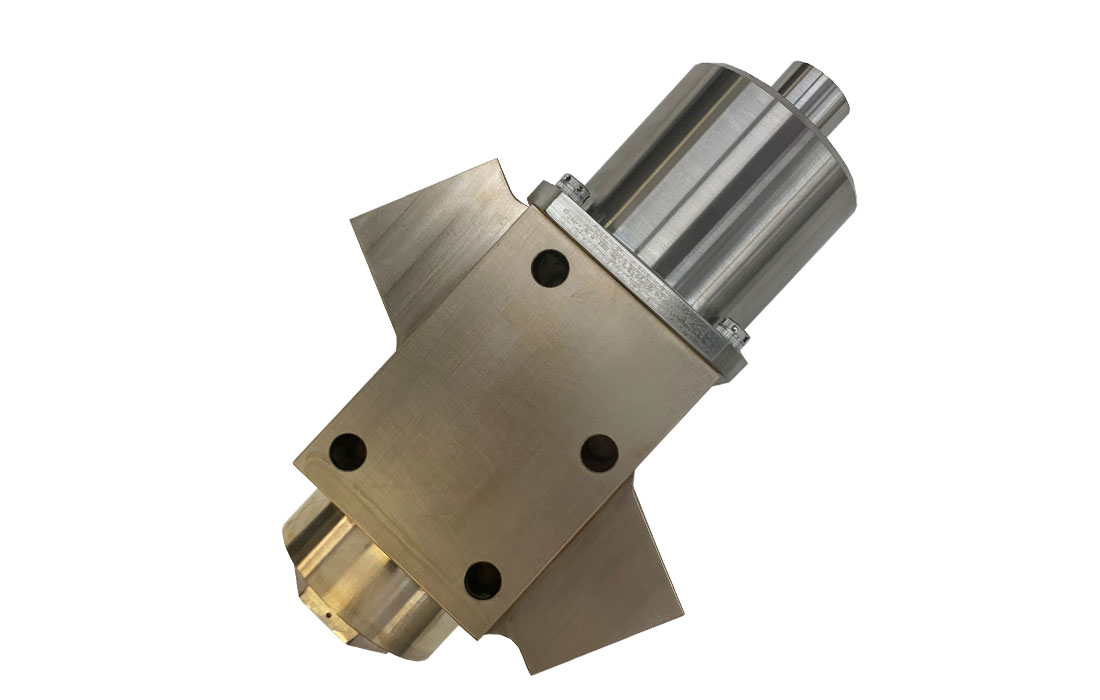
Our Complete Expertise
Marotta’s heritage with liquid nitrogen flow control valves and more dates back to the Apollo and Saturn days of NASA. The PV20T, PV25T, and MV36M were designed and developed for various ground support and spaceflight cryogenic applications with liquid oxygen, liquid nitrogen, and liquid hydrogen fluid transfer systems. Modernizing these design concepts using lessons learned from Marotta’s CoRe® production line has resulted in a robust and reliable series of modern cryogenic valve systems.
- Operating temperatures as low as -423°F (-252°C)
- Compatible with liquid hydrogen, oxygen, and nitrogen
- Compact, lightweight
- Long service life
Fill out the form below to download Cryogenic Valves
Cryogenic Valve Applications Across Spaceflight and Ground Systems
Our cryogenic propulsion support components serve mission-critical roles in cryogenic fluid transfer systems supporting liquid oxygen, liquid nitrogen, and liquid hydrogen Examples of applications include:
- Launch vehicle ground support equipment
- Spacecraft fueling and propellant control
- Test stands and cryogenic conditioning systems
Pressure-actuated aerospace cryogenic valves such as the PV20T and PV25T are typically used where control pressure is available and electrical power is limited or undesirable. On the other hand, direct-acting cryogenic control valves such as the MV36M are used in cryogenic fluid handling systems that require electrical actuation at ultra-low temperatures. No matter the situation, our liquid oxygen control valves are designed to maintain sealing performance, cycle life, and actuation reliability under repeated thermal cycling and cryogenic exposure.
Frequently Asked Questions About Cryogenic Control Valves
What fluids are Marotta’s cryogenic valves designed to handle?
These flight-qualified fluid transfer valves are compatible with liquid oxygen, liquid nitrogen, liquid hydrogen, and inert gases. Fluid compatibility varies by valve model and configuration, and material selection and cleaning processes are critical for use in oxygen and hydrogen service.
How cold can Marotta’s launch vehicle cryogenic valves operate?
Depending on the valve type, our cryogenic ground support equipment valves feature operating ranges down to -320°F (-195°C) or -423°F (-252°C). The material stability and seal configuration of these spaceflight cryogenic components is what enables their ultra-low-temperature valve design.
What is the difference between pressure-actuated and direct-acting cryogenic valves?
Pressure-actuated valves don’t need electrical power, operating instead on system pressure. Direct-acting valves, however, are electrically actuated for applications that call for independent control. The right valve for a specific application depends on the system architecture, available power, and control philosophy.
Why is leak performance critical in cryogenic valve applications?
If leaks occur, cryogenic fluids can present safety, efficiency, and contamination risks. At cryogenic temperatures, thermal contraction can challenge the integrity of seals. This is why low-leakage cryogenic valves are critical for overall system reliability.