What Are Aerospace Thermal Management Systems?
Aerospace vehicles require integrated technologies to regulate, transfer, dissipate, or retain heat. These thermal management systems are crucial in aircraft, spacecraft, avionics, propulsion systems, and mission-critical electronics. Without these systems, aerospace vehicles and components would not be able to maintain safe operating temperatures.
This is critical because aerospace systems must operate in extreme environmental conditions such as vacuum environments, high-altitude operation, thermal cycling, high-G maneuvers, and rapidly changing external temperatures. These conditions can cause premature system degradation or mission failure. At the same time, aerospace platforms generate increasingly high thermal loads because of their denser electronics, electrification, advanced sensors, radar systems, directed energy technologies, and more-powerful propulsion systems. All of this makes aerospace thermal management significantly more complex than traditional industrial cooling applications.
Key Design Tradeoffs in Aerospace Thermal Management Systems
Designing aerospace thermal management systems requires balancing multiple competing priorities at the same time. The most important of these include system weight, cooling capacity, physical footprint, efficiency, reliability, manufacturability, and power consumption. This means engineers who want to optimize any one of these performance factors typically create limitations in other areas of the system.
Reducing system size and weight is increasingly important in aerospace applications, because even small increases in mass can have significant effects on launch costs, payload capacity, aircraft range, fuel efficiency, and mission flexibility. This means compact cooling architectures are more important than ever as aerospace electronics shrink in size and generate more heat.
At the same time, aerospace thermal systems are under increasing pressure to meet durability and reliability demands. This is especially true for military aircraft and spacecraft. High-performance thermal systems must be capable of withstanding vibration, shock loading, thermal cycling, and extreme operating conditions without compromising thermal performance. These are just a few of the many reasons why strategies for thermal management in aerospace applications must be heavily customized to meet the mission and the environment.
Common Aerospace Thermal Management Technologies and Applications
Some of the most common types of aerospace heat management systems include:
- Air Cooling: These systems use vents, fans, or blowers to move air across the surface of components, absorbing heat and moving it away from the system. This presents challenges at extremely high altitudes, where the air may be too thin to hold heat.
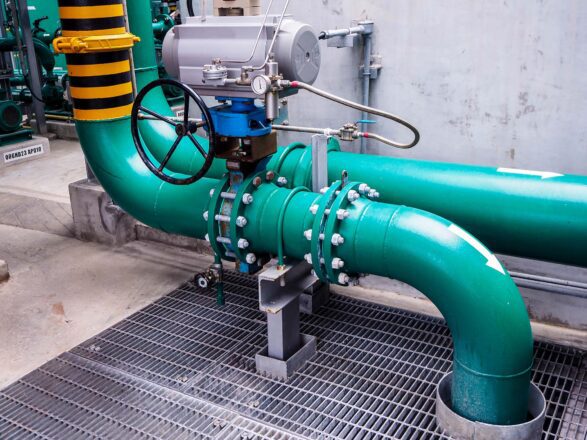
- Liquid Cooling: Because liquids are denser than air, they are more effective at capturing and carrying away heat. This cooling technology uses special liquids pumped to heat exchangers before they are carried back to the components.
- Vapor Compression: Refrigerants are used in these systems to absorb heat, causing them to evaporate. The resulting gas is sent to a compressor to be converted back into liquid form to repeat the process.
- Heat Pipes: In this passive cooling system, small, sealed tubes filled with liquid are positioned close to components. As they are heated, the liquid becomes vapor and moves to the cooler end of the tube where it condenses back into liquid.
- Cryogenic Cooling: These systems use cryogenic fluids, such as liquid nitrogen, to maintain extremely low temperatures for components that require deep cooling. This can be useful in space applications where convection is unavailable and heat must be managed through conduction, radiation, or closed-loop cooling architectures.
Liquid, two-phase, and cryogenic aerospace cooling systems are becoming more common in aerospace applications because they can offer better heat transfer performance than traditional air-based approaches. At the same time, they can support higher-performance electronics and more compact system architectures, which are vital for modern aerospace systems.
The Future of Aerospace Thermal Management System Design
Aerospace platforms continue to have higher thermal management demands due to increasing electrification, autonomous systems, advanced avionics systems, high-powered sensors, and next-generation propulsion technologies. This means future thermal management systems must remove larger heat loads while also taking up less space and consuming less power.
As thermal management demand increases, engineers and manufacturers are responding with new technologies and materials. Emerging technologies such as microchannel heat exchangers, smart monitoring systems, and integrated thermal architectures are improving heat transfer efficiency while also reducing system mass and packaging constraints.
As customization, long-term reliability, and application-specific engineering become increasingly important to aerospace thermal management solutions, manufacturers need partners who can help them keep pace with evolving demands. Marotta Controls is an experienced aerospace engineering and manufacturing partner delivering thermal management systems and mission-critical thermal solutions for some of the most demanding applications in the world. To learn more about our precision flow control solutions and control systems, reach out to speak with a member of our team today.
About Marotta Controls
Founded in 1943, Marotta Controls is a fully integrated solutions provider that designs, develops, qualifies, and manufactures innovative systems and sub-systems for the aerospace and defense sectors. Our portfolio includes pressure, power, motion, fluid, and electronic controls for tactical systems, shipboard and sub-sea applications, satellites, launch vehicles, and aircraft systems. With over 200 patents, Marotta Controls continues to build on its legacy as a highly respected, family-owned small business based in the state of New Jersey. LinkedIn: Marotta Controls, Inc.
# # #
Contact:
Katee Glass | Marotta Controls, Inc. | [email protected]